Everything You Can Have Of The Designer Rahul Mishra

Everything You Can Have Of The Designer Rahul Mishra

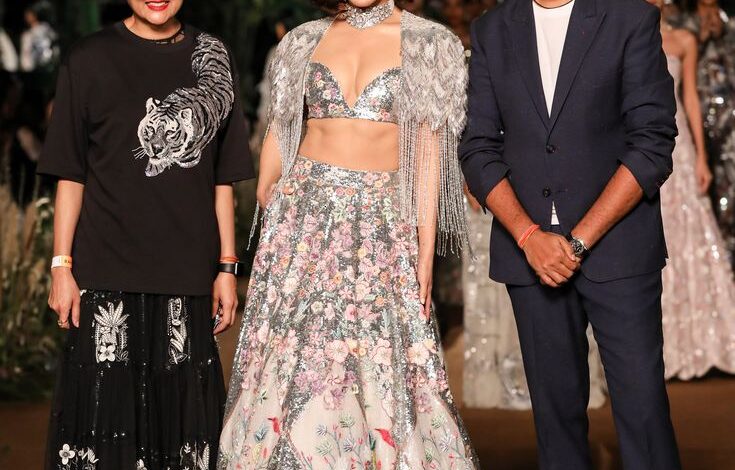
Rahul Mishra is one of the leading fashion designers of India, a master in Indian aesthetics mixed with multi-pronged modern aesthetics. He has highly detailed embroidery, thin and delicate textiles, and unique men’s clothing designs that have placed him in the new pedestal of international repute. Most of the time, Mishra’s designs are oriented towards nature, architecture, and Indian roots, making his creations beautiful and meaningful. This has made him a guru in the production of timeless garments that are also environmentally friendly. Features of Rahul Mishra Designs Intricate Embroidery: Some of the well-recognized hand embroidery works that Mishra uses are zardozi, chikankari, and gota patti that are incorporated in his creations. Delicate Fabrics: He loves to use satin, silk, organza, velvet, and tulle that give the theme of romantic and free-moving dress styles. Modern Twist: Even if Mishra is designing under the influence of traditional Indian aesthetics, many of his design features are contemporary, for instance, the use of bright colors and geometrical cuts and asymmetrical cuts. Sustainability: Rahul Mishra is quite adherent to the principles of sustainable development of the fashion industry and frequently employs environmentally friendly materials and technologies. Where to Purchase Rahul Mishra Designs? Flagship Stores: You can experience the collection in the flagship stores located in India of the brand. Multi-Brand Boutiques: Currently, Rahul Mishra’s collections are sold in some luxury multi-brand stores in different parts of the world. Online Retailers: You can also buy his creations through the internet-based luxury fashion outlets. Notable Incentives Ethical Sourcing: Mishra’s sensibility is reflected in how fabrics and other materials are sourced; she takes great pains to ensure that these are manufactured in the right way. Eco-Friendly Techniques: He is also environmentally conscious in production methods that are used in the production wall clocks, like using less water. Sustainable Materials: In most of his designs, the designer tends to use environmentally friendly fabrics such as organic cotton, recycled clothes, and naturally produced dyes. Community Engagement: Mishra is also involved with multiple community welfare programs that are focused on promoting the artisans and craftsmen who work on his creations. Latest Collections Fusion of Traditional and Modern: Mishra tends to combine the classic Indian patterns of ornaments, beautiful needlework, and bright color palette with more modern cut and technology. Focus on Sustainability: In his collections, he uses sustainable fabrics and makes sure the production process is purely ethical. Attention to Detail: Mishra is very particular with the cut and every jewelry item that he creates is very detail oriented. Playful and Feminine: He possesses the ability to put out clothing that is fun and pretty—the kind that is light and sensual in its forms and fabrics. Creativity of Rahul Mishra’s Designs Inspiration: In Indian art, history, and culture, Hossain quotes more that can help him to achieve a personal artistic and historical statement. He too might be inspired by events happening around him; he might be driven by an experience that he went through or maybe even nature itself. Research: However, when he has a clear vision of the subject or the idea of the whole collection, he starts researching. This might include learning about antique fabrics, learning about folk art, or even focusing on the current trends in fashion. Sketching: Mishra initiates the process with the primary concepts and then tries various possibilities of outlines, fabrics, and decoration. He frequently uses the technique of the moodboard, as well as making collages of images that would convey the final idea of the collection. Fabric Selection: This is particularly true in the selection of the fabric that he uses in his clothes. To achieve the best result, he chooses the type of fabrics that fit the theme of the pair and add value to the outlook of the garments. Sampling: After this, the samples are sewn in preparation for the final and actual gown to be made to fit the intended appearance. Production: The last work on the articles of the collection is done in the workshops, where masterpieces are crafted by local fashion designers. Conclusion Rahul Mishra has been a prominent designer from India who is famous for his skillful designing and craftsmanship, besides being particular about the sustainability of his creations. With his impeccable choice of balance between the proud Indian motifs and modern trends, he was finally recognized globally.

Read More
 Lisa Ray’s Resplendent Comeback For Rahul Mishra At India Couture Week

Lisa Ray’s Resplendent Comeback For Rahul Mishra At India Couture Week

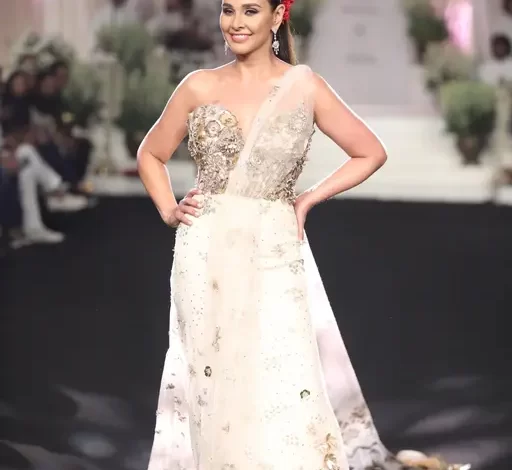
Lisa Ray: A Star is Reborn on the Runway At the India Couture Week 2024, something just happened, pervading ripples of nostalgia and awe through the fashion fraternity. The eternal, ethereal Lisa Ray, best remembered for her ethereal beauty in the song “Afreen Afreen,” is making a breathtaking comeback to the runway as the showstopper for renowned designer Rahul Mishra.   In her mesmerizing saree gown, with a peacock-themed train, Lisa looked every inch a vision in elegance and grace. With the soulful strains of “Afreen Afreen,” as she walked, Lisa took the audience into timeless beauty and enchantment. Her presence spoke as much for star power as for the magic she infuses onto the screen and the runway. Rahul Mishra’s Nature-Inspired Extravaganza The runway was all ready to showcase a spectacle when Rahul Mishra presented his collection, “Nargis.” Inspired by serenity in nature, it was a beautiful play of color, texture, and intricate embroideries. From vibrant sarees to opulent lehengas and chic pantsuits, every single piece of garment turned out to be a marvel of craftsmanship. Minute attention to detail is reflected in the exquisite floral motifs, delicate embellishments, and harmonious color palette.   The collection epitomized the wonders of nature, and in each of these masterpieces, his idea of a strong connection with nature was more than evident. The peacock-themed costume Lisa wore, in that sense, was the high point of the show, entirely capturing the spirit behind the inspiration. A Perfect Fusion of Past and Present Lisa Ray’s coming on board was a masterstroke of Rahul Mishra. He matched his touch of style to the timeless song and her iconic status. What it did to the audience was to take them down memory lane while being driven by contemporary elegance. It was a testimony to the enigma of style and to the spirit of momentary experiences that get wired into memory. It was a celebration of Indian craftsmanship and the artistry of Lisa Ray and Rahul Mishra. As the curtains came down, the audience was spellbound, looking for more such moments of magic on the ramp in fashion.

Read More
 Nita Mukesh Ambani Cultural Centre in Mumbai : A Complete Guide

Nita Mukesh Ambani Cultural Centre in Mumbai : A Complete Guide

Nita Mukesh Ambani Cultural Centre ( NMACC )  is among Mumbai’s most upscale commercial sector and a brand-new cultural institution. Bandra Kurla Complex is home to the newest and most impressive multi-disciplinary cultural facility in the city: the Nita Mukesh Ambani Cultural Centre (NMACC for short). The biggest names in Indian and worldwide showbiz, as well as fashion icons and critically acclaimed performers, attended the three-day launch event, which made headlines around the world. (credits : NMACC official Youtube ) (credits : NMACC official Youtube ) Nita Ambani has stated that the centre will attract “the brightest talent from India’s metropolis, small towns, and remote regions.” (credits : NMACC official Youtube ) A section of the NMACC’s current “India in Fashion” exhibition is devoted to the history of the sari. An expansive 2000-seat Grand Theatre, a state-of-the-art 250-seat Studio Theatre, and a lively 125-seat Cube are all available for performances at NMACC. The Art House, a four-story visual arts venue designed in accordance with international museum standards and intended to house a wide variety of exhibits and installations from India and around the world, is also located within the complex. Nita Ambani said that the centre will attract “the finest talent from India’s metropolis, small towns, and remote regions.” The architectural concept for NMACC was conceived with India’s storied past in mind. The modern façade and interior of the centre feature elements of Indian culture, such as lotus flower themes and the largest commissioned Pichwai painting. In addition to Richard Gluckman, who oversaw the Art House, the Atlanta firm TVS Design played a significant role in the design of NMACC. The lighting system in the Grand Theatre of NMACC is augmented by 8400 Swarovski crystals. The Grand Theatre is equipped with state-of-the-art integrated Dolby Atmos systems and a customizable lighting system augmented by over 8400 Swarovski crystals, both of which contribute to the ultimate in immersive experiences. There are 2000 seats in the theatre (designed by Poltrona Frau), all of which have excellent views of the stage (save for the 18 seats in the special Diamond Boxes). (credits : NMACC official Youtube ) The Studio Theatre’s telescoping seating is just one of the many ways in which it may be reconfigured to suit the requirements of a given performance. The tension wire grid is the first of its kind in India, and it greatly simplifies lighting and rigging for the duration of the production. Finally, The Cube is a small venue that supports experimental theatre and showcases up-and-coming artists. The area also has state-of-the-art laser projection technology, lighting with infrared emitters, and recording infrastructure. (credits : NMACC official Youtube ) The NMACC is now hosting a group exhibition by the namesake coordinated by Jeffrey Deitch and Ranjit Hoskote. The massive 16,000 square foot Art House at NMACC was designed to feature a rotating roster of installations and displays that make accessible the museum’s collection of Indian and international art. The current exhibition is a group show named “Sangam/Confluence,” curated by Ranjit Hoskote and Jeffrey Deitch. The exhibition shows how artists do not limit themselves to one language, medium, or style as they celebrate India’s many cultural traditions via the works of modern Indian and worldwide artists. Anselm Kiefer, Cecily Brown, Francesco Clemente, Lynda Benglis, and Raqib Shaw are just a few of the international artists who have been greatly influenced by India. Other artists featured in the exhibition are Bharti Kher, Bhupen Khakhar, Ranjani Shettar, Ratheesh T, and Shanti Bai. India in Fashion’s “The Hippie Trail” exhibition at the Nita Mukesh Ambani Cultural Centre (NMACC) in Mumbai’s Design Quarter features the work of Anamika Khanna and Rudi Gernreich. NMACC is responsible for the use of these images. To celebrate the opening of the NMACC, fashion great Hamish Bowles produced a magnificent exhibition. The exhibition, titled “India in Fashion,” delves into the multifaceted influence that traditional Indian garments, fabrics, and workmanship have had on the global fashion perception since the 18th century. The show presents a thorough chronicle of the emergence and evolution of the contemporary Indian fashion community, from the iconic Bollywood clothes that moulded the sartorial narratives of the period to the historical chintz garments worn by the British upper classes. Patrick Kinmonth and Rooshad Shroff developed the lavish, theatrical scenography, which draws inspiration from locations like Indian step wells and Jaipur’s Jantar Mantar. (credits : NMACC official Youtube ) ‘India in Fashion‘ features both established and emerging designers from India. The exhibition “India in Fashion” showcases the work of a number of influential Indian fashion designers, including Abu Jani Sandeep Khosla, Anamika Khanna, Anita Dongre, Anuradha Vakil, Manish Arora, Manish Malhotra, Rahul Jain, Rahul Mishra, Ritu Kumar, Sabyasachi Mukherjee, Sanjay Garg, and Tarun Tahiliani. Fashion icons from throughout the world, including Coco Chanel, Jean-Philippe Worth, Mainbocher, Yves Saint Laurent, and Elsa Schiaparelli, are also included in this one-of-a-kind celebration of India’s rich fashion heritage. ‘Kamal Kunj,’ the largest commissioned Pichwai painting, and ‘Clouds’ by Yayoi Kusama, a 90-piece stainless steel structure that mirrors the sky, are just a couple examples of the public art installations at NMACC outside the ticketed events and shows and many others at showcased at Nita Mukesh Ambani Cultural Centre ( NMACC ) in Mumbai ….. (credits : NMACC official Youtube )

Read More