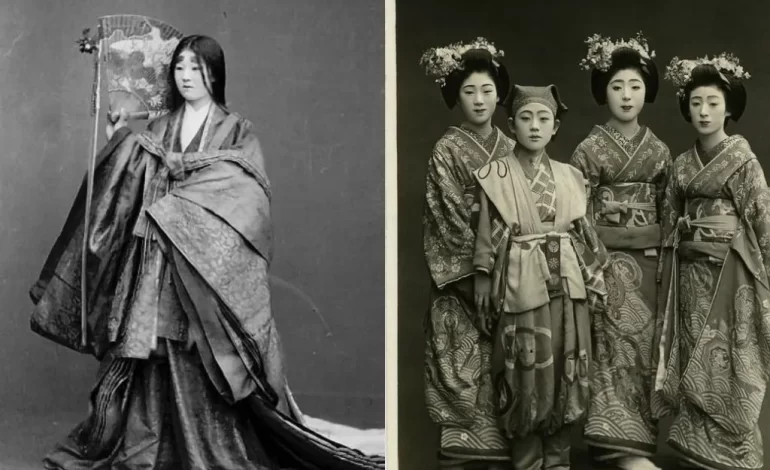

Beauty Standards Of Japan In Olden Times
Linked squarely to Japan’s cultural history, the concepts of beauty evolved over centuries. From aristocratic elegance during the Heian period through dramatic change during the Edo era, Japanese notions of beauty constantly reflected the era in which they existed and would generally disclose influences of sociocultural and religious conditions prevalent at the time. The article focuses on beauty standards that shaped the lives of both Japanese men and women in olden times, pointing out all those intricate rituals and symbolism that defined their aesthetic ideals. Heian Period, 794–1185: The Pinnacle Of Aristocratic Japan Beauty The Heian era is conventionally considered the golden age of Japanese culture, comprising an efflorescence of literature, art, and courtly life in all spheres. In the Heian era, the model of beauty was provided by the aristocracy and more particularly the ladies at court since their outward aspect was to be representative of their status and culture in every respect. Pale Skin And Long Hair: Pale, blemishless skin and highly valued for showing purity and nobility. Women used white face powder made from rice flour to make their skin look ghostly pale, so unlike any natural skin color. Long, straight hair was another feature of beauty; women grew their hair to incredible lengths, often reaching the floor. Oshiroi And Hikimayu: Oshiroi was a white face powder applied to the neck and hands, as well as on the face, to give an ethereal touch to the body. Another distinctive feature was hikimayu, or the shaving and plucking of natural eyebrows to paint on thick black brows high on the forehead. This gave the face a serene, almost doll-like expression-ideal for a woman. Ohaguro And Thin Lips: Ohaguro or blackening of teeth was done by the aristocratic women and later by the married women in general. A black stain made up of iron filings mixed with vinegar was applied to the teeth. Believed to increase the contrast between black and white and express loyalty in marriage. The Kamakura And Muromachi Periods: The Beauty Of Simplicity And Elegance There was a lot of time in between the gap between the Kamakura and Muromachi periods, and within that period, Japan saw the rise of the samurai class into prominence. With this came the change in the concepts of beauty. The sense of the aesthetic turned grave and quiet, much like the vibes of the stern disciplines of the warrior class. Natural Beauty: Although pale skin was still considered the most beautiful, it was a movement toward natural beauty. Women began to wear less makeup and revealed their ‘natural’ faces. Extravagantly curled hairstyles of the Heian era gave way to simple ones, many times worn pulled back and out of sight or in a small bun. Kimono And Colors: Clothing also was important in the expression of the beauty of a woman. A woman’s status, age, and what season it was would be determined by her kimono color and pattern. The sophisticated, soft colors, such as pastel shades and earth tones, were used rather than gaudy colors as in the Heian period. The Edo Period: Transformation Into the Modern Era, 1603-1868 The Edo period in Japan has been a transformation into the modern era socially and culturally. With the emerging merchant class and the thriving urban hubs such as Edo, which is modern-day Tokyo, ideals of beauty are becoming increasingly diverse and reachable. The Allure Of The Geisha: Geikos were accomplished entertainers who were beautiful, graceful, and artistic; thus, they soon became the icons of beauty in the Edo period. Their large hairstyles, complete with the elaborate hairpins and combs, topped by their brightly colored kimonos, became ultra-fashionable. The Idea Of The Courtesan: Central to this beauty culture, too, were the oiran, or high-ranking courtesans. Their theatrical appearance was given to grand hairstyles-mostly supported by great wooden combs and multi-layered kimonos with bold patterns. The oiran were the trendsetters, and their looks were emulated by women of all classes. Changing Concepts Of Beauty: The subdued grace of the previous age yielded a more vivid and demonstrative form of beauty in the Edo age. Women, therefore, began experimenting with newer and bolder means of makeup-such as red lipstick or Beni and white foundation or shironuri, on occasion. Conclusion: Beauty standards in olden Japan were not exactly about the physical but were highly symbolic, as they brought out the values, social structures, and cultural practices of those times. From the serene surreal beauty of Heian court beauties to bold and expressive styles, the standards of Edo have left an indelible mark on Japanese culture. It is interesting to note that certain features of those ancient practices show up in current Japanese aesthetics as a residual from a timeless past.
Read More